Imagini ale istoriei, istorii ale imaginii
An exhibition bringing together a hundred years of Romanian art under one roof: from the historical avant-garde to today's painting, photography, sculpture, and video. From 09.10.2026 to 04.25.2027.
The exhibition Images of History, Histories of the Image suggests a path through modern and contemporary Romanian art based not so much on the succession of generations and styles, but on the transformations of the image itself. From the historical avant-garde and post-War experiments in abstraction to contemporary painting, photography, sculpture, objects, installation, and video, this project follows how the status, function, and sense-making power of the image has changed.
The history of art appears here not as a linear series of formulas that succeed each other, but rather as a field of tensions, returns, and overlaps, where the figurative and nonfigurative, tradition and modernity, memory and the present, representation and presence constantly reemerge. The title of the exhibition should be read in both directions. There are images of history: works that bear the marks of certain eras, events, social experiences, or regimes of the visible. But there are also histories of the image: transformations of the image from a representation of something to an autonomous construction, sign, structure, object, body, document, archive, situation, or duration. History produces images, but images, in turn, select what remains visible, organize memory, and shape how we can see the past from the present.
The four main chapters of the exhibition—The Modern Eye, The Measure of the World, The Image That Looks Back, and After the Image—do not carve out rigid historical periods. Instead, they describe four possibilities of the image and four moments in the experience of seeing. They do not amount to a simple evolution from representation to abstraction, and then to object and installation. On the contrary, the forms of images accumulate, contradict, and redefine each other. Modernity is not overruled by the contemporary, the figurative is not erased by the abstract, and tradition is not pushed to the margins of modernity. This exhibition attempts to eschew these all-too-comfortable and all-too-predictable dichotomies.
I. THE MODERN EYE
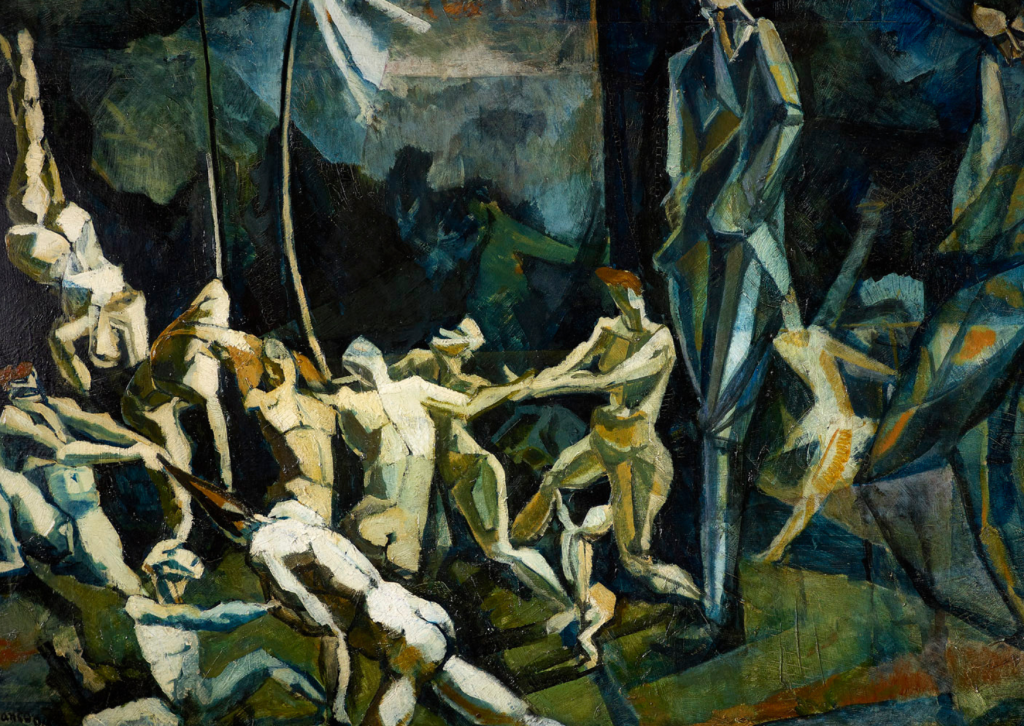
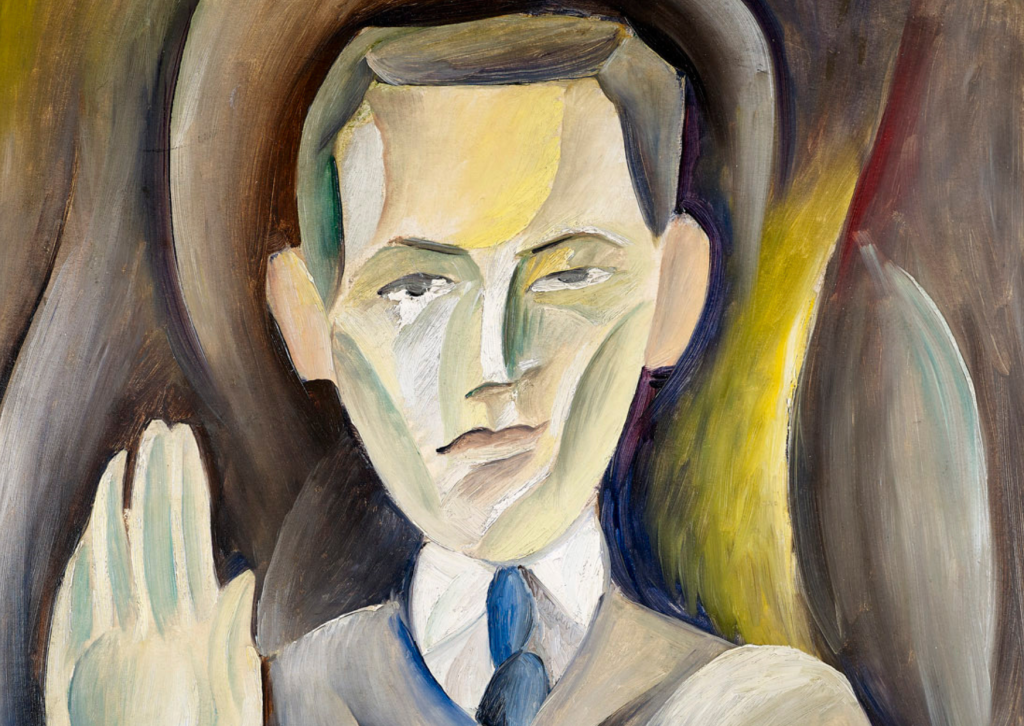
The Modern Eye begins with the crisis of representation triggered by modernity. In the works of Nicolae Tonitza, Marcel Iancu, M.H. Maxy, Victor Brauner, and Jules Perahim, the world is no longer simply reproduced. Space becomes fragmented, the figure is distorted, the construction of a painting becomes visible, and the imaginary seeps into the real. In Brauner’s work, the eye itself becomes the image of this instability: seeing is no longer a neutral tool that guarantees access to reality, but a vulnerable and problematic territory. From here stems the impetus for one of the exhibition’s main dynamics: the image discovers that it can do more than represent; it can produce its own reality. In the work of Ion Țuculescu, color, sign, and repetition transform the surface of the canvas into an autonomous field, without cutting off its connections to ornamentation, popular culture, and the memory of archaic forms.
Here, one of the recurring tensions in Romanian art is rendered visible, between modernity and the nostalgia of tradition. However, this exhibition refuses to frame this relationship as a predictable dialogue between two opposing sides. Tradition can constitute the material of experimentation, just as modernity can resurrect old forms without negating its own radical language.
II. THE MEASURE OF THE WORLD
The Measure of the World follows what happens when the image becomes a tool of construction and knowledge. For Horia Damian, Marin Gherasim, Diet Sayler, Mihai Horea, Florin Mitroi, Eugen Tăutu, and Ștefan Sevastre, geometry, modularity, rhythm, and chromatic relationships form different models of the visible. In the work of Mihai Olos and Alexandru Chira, structure becomes a personal cosmology and geometry meets mythology and memory. In The Great General Scheme of Everything. Beginning 029 by Nicolae Comănescu, the very ambition to impose order on totality is approached once again in a contemporary register, inevitably conscious that any definitive system will ultimately prove precarious.
After abstraction, geometry, conceptualism, and object, the figure returns profoundly changed: the body becomes structure, rhythm, repetition, and multitude. The image becomes embodied.
III. THE IMAGE THAT LOOKS BACK
This transition sets the stage for the second floor and the chapter entitled The Image That Looks Back. Here, the issue is no longer the autonomy of the image, but its capacity to preserve, transform, and reactivate memory. Contemporary painting emerges in a world already saturated by photographic, cinematographic, televisual, and digital images. Ioana Bătrânu, Vioara Bara, Lorena Andreea Bojenoiu, Suzana Dan, Adrian Ghenie, Victor Man, Gili Mocanu, Anca Mureșan, Dumitru Gorzo, Șerban Savu, Gheorghe Ilea, and Ștefan Ungureanu do not simply return to the figure. The contemporary figure has already experienced abstraction, conceptualism, and technical reproduction.
IV. AFTER THE IMAGE
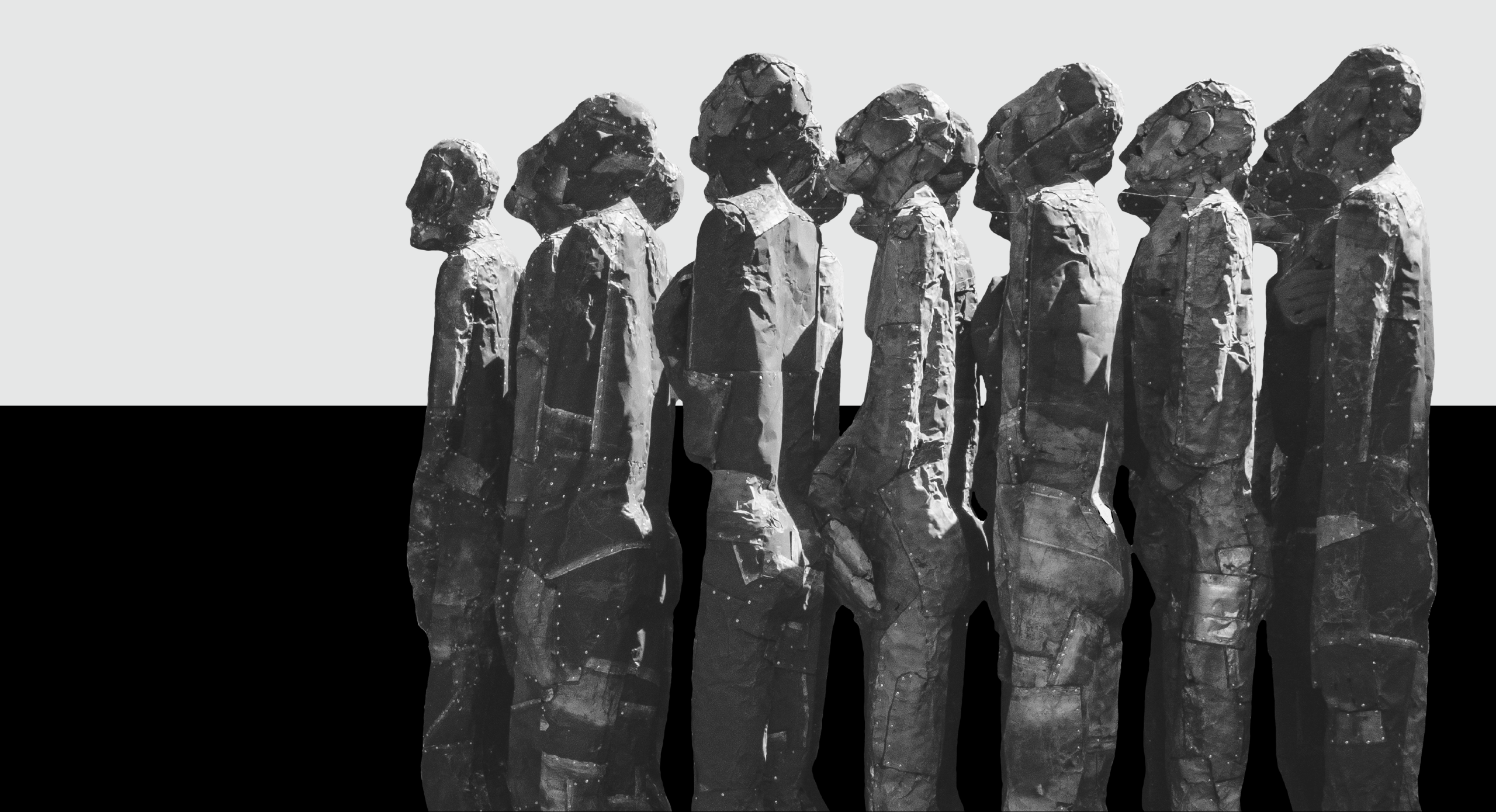
The final chapter, After the Image, does not proclaim the disappearance of the image. On the contrary, it marks the moment when the image has so expanded its forms that it can no longer be identified with a particular medium. Painting, photography, objects, sculpture, installation, and video no longer function as separate domains. Sculpture thus makes visible the difference between representation and presence: a painting can depict a body, an object can bear its trace, and a sculpture can occupy its space, forcing the viewer to retrace their course. The image is no longer something to be seen, but something we enter into a physical relationship with.
Curator: Ruxandra Demetrescu
Asistent curator: Ioana Iuna Șerban, curator MARe
Timeline: Elena Stanciu
Research: Maria Grigorescu și Iasmina Dobre
Thus, Images of History, Histories of the Image is not an illustrated history of Romanian art, but an exhibition about the potential of images: about their capacity to survive the contexts that produced them, to preserve and warp memory, to order the world and to destabilize it, to recover tradition and transform it, to become object, body, space, situation, time. History alters images, but images also alter the way we can see history. The trajectory of the exhibition lies between these two movements, not as a demonstration leading toward a conclusion, but as a series of encounters where the image reveals its capacity to become something else each time.
Credite:
Marcel Iancu, Inferno, 1915, oil on cardboard, 66×93 cm, MARe/Museum of Recent Art collection
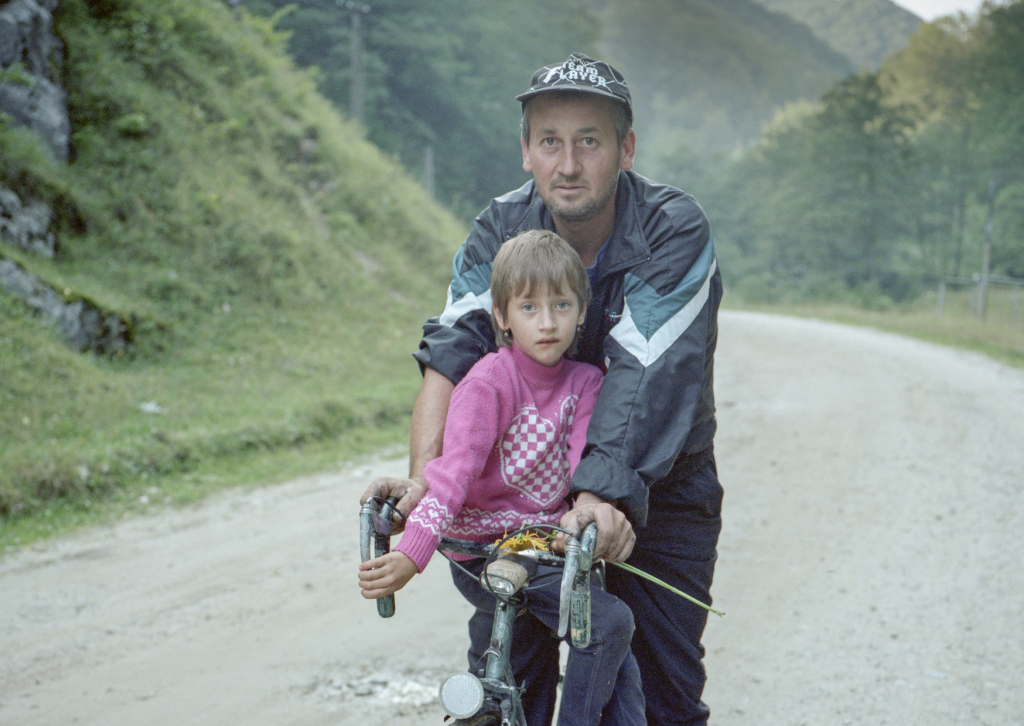
Ioana Cîrlig, Post-Industrial Stories V, 2012, photo matt fibre 200g, 80×80 cm, MARe/Museum of Recent Art collection
Victor Brauner, Self-portrait with a Crying Eye, 1923/1924, oil on cardboard, 103.5×85 cm, MARe/Museum of Recent Art collection
Photo credit: Alexandru Paul
CUMPĂRĂ BILET